

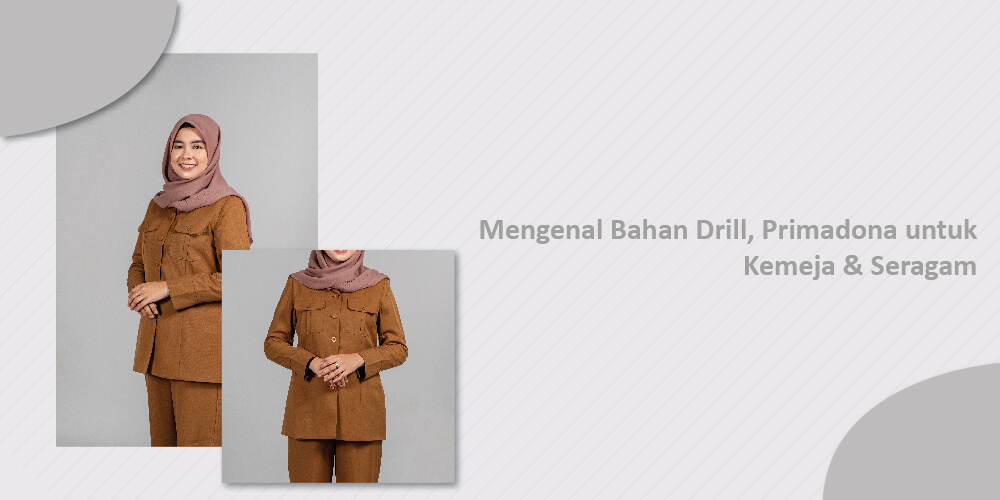
If you have ordered office shirts, field uniforms or work trousers, you have almost certainly been offered drill. It remains the most widely used fabric for uniforms and workwear — and there are good reasons for that, beyond habit.
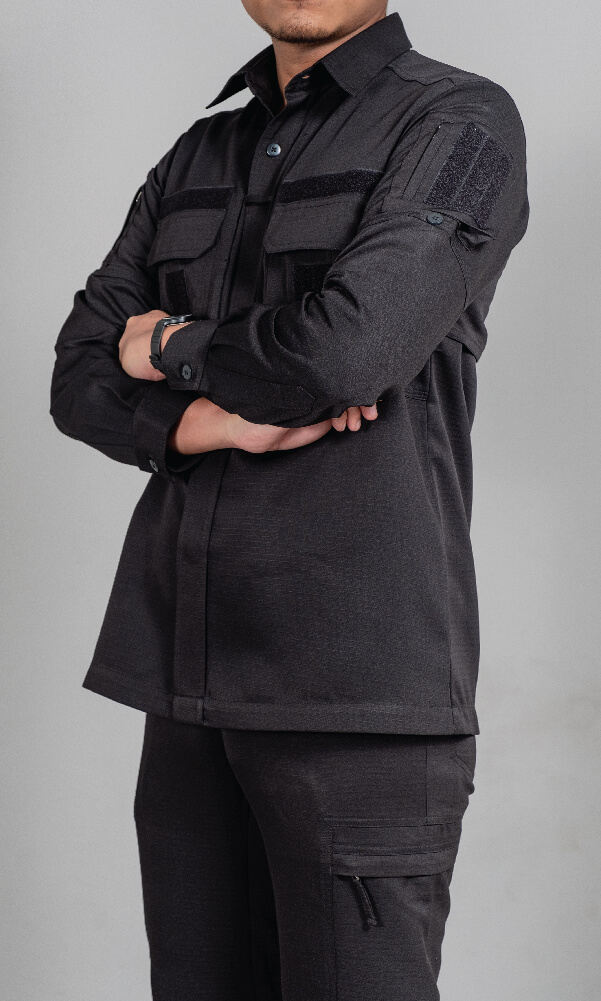
What drill actually is
The name comes from the German drillich, meaning three threads. Drill is a woven fabric with a distinctive diagonal weave and a strong yarn interlock, which is what gives it its durability. It is made in pure cotton and in cotton–polyester blends.
The diagonal structure is the whole point: it produces a fabric that looks smart enough for office wear while being tough enough for the field. If you want a shirt that reads as premium but still breathes in heat, drill is the obvious starting point.
Where it came from
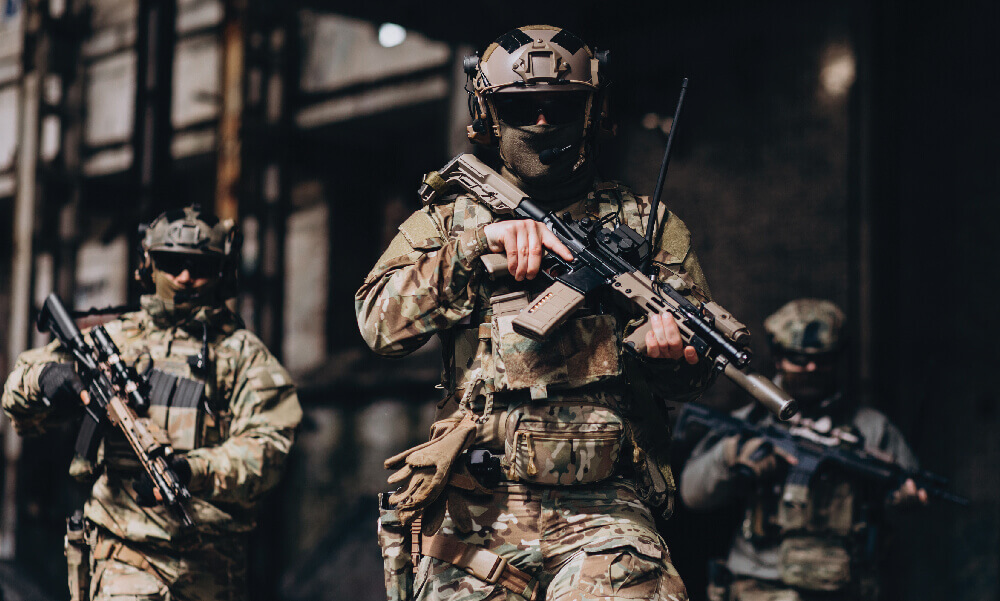
Drill was originally a military fabric, used for army uniforms — American drill in particular. As it proved itself, it moved into civilian workwear and then into office uniforms, which is where most of it goes today.
Heavy drill and light drill
There are many drill variants on the market, but they divide broadly into two groups. The characteristics are similar; what separates them is weight.
Heavy drill — excellent thickness, good comfort, excellent durability, higher price. Common examples are Taipan and Japan Tropical Drill. This is what field uniforms are usually made from.
Light drill — adequate thickness, good comfort, good durability, lower price. American, Americo and Japan Drill sit here. Better suited to office use, where durability requirements are lower and comfort in heat matters more.
Choosing between them
Match the weight to the work. Heavy drill on someone sitting in an air-conditioned office is uncomfortable and unnecessarily expensive; light drill on a maintenance crew will not last. If the same uniform covers both, specify by role rather than buying one weight for everyone.
PT Sansan Saudaratex Jaya produces shirts, trousers and workwear in drill and other uniform fabrics, with fabric sized, dyed and finished in-house.